Spooky season is here, and with it comes the annual return of Halloween marketing campaigns. Witches, werewolves, and wait… no tricks, just treats.
Apparently, the scariest thing in marketing this Halloween is the prospect of an original headline. We’re not sure about you, but we’re finding the same messaging haunting our inbox this year. But why is everything so frighteningly familiar, and where has the fun gone?
A Grave Case of Déjà Boo
To some degree, when it’s Halloween we can expect a level of cliché. We see hundreds of examples of ‘spooktacular’, ‘fang-tastic’ and ‘hauntingly good deals’, every year. However, this year, we’ve seen more ‘no tricks, just treats’ than ever before landing in our inboxes.
The phrase has been used by Asda, Greggs, car dealerships and shopping centres. Brands, big and small, have all hopped on the same concept, regardless of what they sell. But why are brands using the same messaging over a genuinely creative idea?
ASDA – Up to the Same Old Tricks
ASDA is one of the bigger brands we’ve seen jumping on the ‘No Tricks, Just Treats’ bandwagon with their Halloween campaign, offering free meals to children who arrive at their cafés in fancy dress.
The issue isn’t the campaign itself. In the current climate, a kids-eat-free offer is a genuinely positive initiative (and we love any excuse to dress up)! The problem is that the headline tells us very little about what the campaign actually involves. Even something as simple as ‘Little Monsters Eat Free’ would give the audience a clearer idea of the offer, while tying Halloween messaging directly to the campaign.
We’re not criticising what ASDA is trying to achieve. The question here is if following an over-used seasonal marketing trend has come at the expense of a stronger creative concept. The offer is good, but the headline misses an opportunity to make it memorable.
Greggs – Usually a Roll Model for Creativity
Greggs is another big name we’ve spotted jumping on the ‘No Tricks, Just Treats’ bandwagon with its Halloween campaign, promoting their spooky seasonal bakes.
What’s particularly interesting here is that Greggs has given us some genuinely strong marketing this year. Its Roll Trilogy campaign treated the launch of its new Chicken Roll like a blockbuster movie release, complete with dramatic trailers and tongue-in-cheek film-style reviews. Their ‘but I don’t like Stilton insurance’ campaign also brought a fun twist to promoting the launch of their Steak and Stilton bake, allowing customers who didn’t like the new option to swap their bake to a classic Steak Bake. The offer itself became the marketing punchline here, allowing customers to engage with the offer and their products.
Both campaigns show how Greggs can take an everyday product or familiar idea and give it a distinctive creative twist. So, seeing them fall back on ‘No Tricks, Just Treats’ for Halloween feels like a missed opportunity.
With spooky buns and pumpkin biscuits already on the menu, there was plenty of scope to create something more distinctly Greggs. A headline that played on the products themselves could have made the campaign more memorable and given customers a clearer idea of what was on offer.
We’re not saying every campaign needs to reinvent the broomstick, but when a brand has already demonstrated that it can deliver creative, personality-led marketing, a generic seasonal tagline feels like a bit of a step backwards. The treats are there, Greggs, we’d just have loved a little more trickery when it came to the creative.
Witch Way Did Creativity Go?
The Curse of the Copy and Paste Campaign
Seasonal marketing can be a tricky business. Brands are working to tight deadlines, competing for attention during some of the busiest promotional periods of the year and trying to keep their content calendars full across email, social media, paid advertising and their websites. And often, with Black Friday around the corner, brands need to make a hard decision on where their efforts are best spent. When there’s so much to produce in such a short space of time, reaching for a familiar idea can feel like the easiest option.
Familiar puns are safe, too. They’re easy to understand, simple to approve and unlikely to raise any eyebrows internally. A phrase like ‘No Tricks, Just Treats’ immediately signals Halloween, requires very little explanation and can be adapted to almost any product or service. From a practical perspective, it’s an easy win.
But when dozens of other brands are using the same line, that convenience comes at a cost: it’s much harder to stand out.
Playing it Safe is a Frightful Mistake
It’s also worth considering the impact of trends and templates. Marketing teams are constantly looking at what’s working elsewhere, whether that’s a viral social media format, a popular seasonal slogan or a particular style of creative. Taking inspiration from successful campaigns isn’t necessarily a bad thing, but there’s a fine line between learning from what’s working and simply replicating it.
Of course, not every campaign needs to be a creative masterpiece. Seasonal marketing often has a straightforward purpose, whether that’s promoting a new product, encouraging bookings or driving sales. The problem is that if the audience has seen the same wording from five other businesses that week, there’s little reason for them to remember who said it.
Make People Scream About Your Brand
This is where creativity becomes more than just a nice-to-have. A distinctive campaign gives people something to associate with your brand, helping you to build recognition beyond your logo or name.
When a brand consistently puts its own spin on seasonal moments, whether through tone of voice, visual identity or ideas, it becomes easier for audiences to recognise their content and distinguish them from competitors. Rather than simply joining the conversation, it’s contributing something of its own.
That recognition can have a longer-term benefit, too. Memorable creative gives people a reason to stop scrolling, share a campaign, talk about it or remember the brand when they’re ready to make a purchase. It can also strengthen the associations people have with a business, building a more recognisable and consistent brand presence over time.
Not every campaign will go viral, and creativity alone won’t guarantee commercial success, but an original idea has a much better chance of leaving a lasting impression than a headline audiences have already seen everywhere else.
Ultimately, being creative doesn’t have to mean having an enormous budget or reinventing seasonal marketing from scratch. Sometimes, it’s simply about taking a familiar idea and finding a way to make it your own. Because if every brand is using the same tricks, perhaps the most effective treat is giving your audience something they haven’t seen before.
From Boo-ring to Brilliant: These Brands Understood the Assignment
Some brands have nailed Halloween marketing this year, proving that seasonal campaigns don’t have to rely on the same tired puns to get people’s attention. From turning supermarket staples into monsters to creating an actual horror film around a bag of crisps, these campaigns show what happens when brands put a little more imagination into their seasonal content.
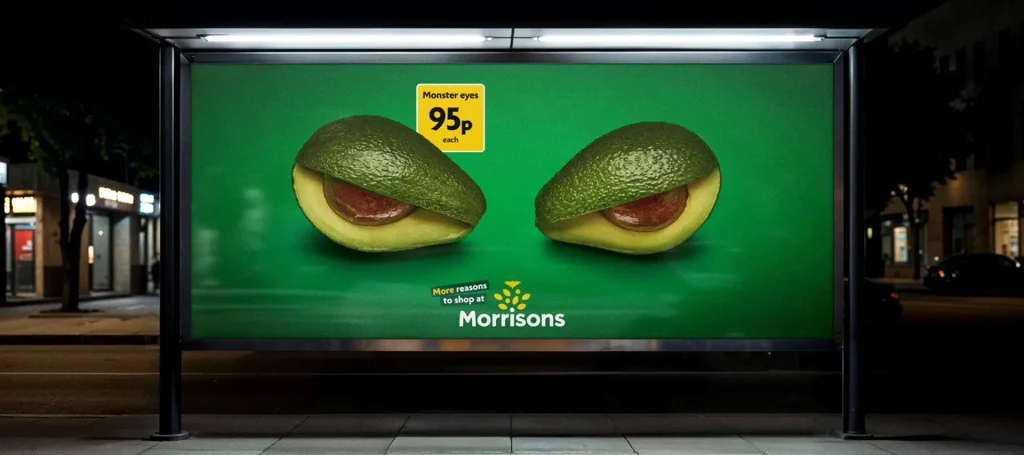
Morrisons – Market Street Monsters
Morrisons’ Market Street Monsters campaign is a brilliant example of taking something ordinary and giving it a seasonal twist without losing sight of what the brand is actually selling.
Created with Leo UK, the campaign transforms everyday fruit and vegetables into Halloween monsters. Avocados become monster eyes, carrots turn into zombie fingers and a red pepper becomes a screaming face.
What makes this work so well is that the creative idea is built around the products themselves. Morrisons hasn’t just added a few bats and pumpkins to a standard supermarket advert and called it a day. Instead, the ingredients become the stars of the campaign, making the products more visually interesting while keeping their prices and value firmly in the spotlight.
It’s also a great example of how creativity doesn’t have to mean abandoning a brand’s usual messaging. The campaign still communicates what Morrisons wants customers to know, but it does so in a way that’s playful, distinctive and instantly recognisable. After all, you’re much more likely to remember a carrot that looks like a zombie finger than another advert telling you to enjoy some spooktacular savings.
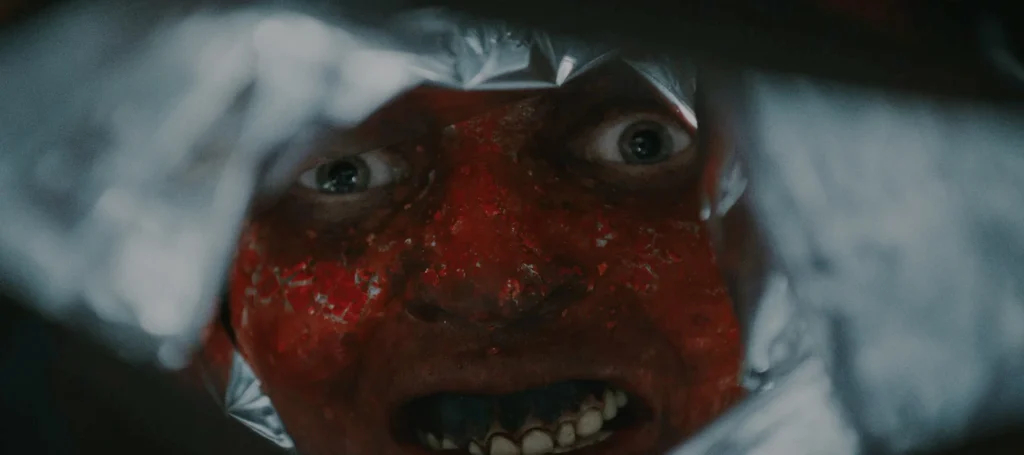
Cheeto’s x Blumhouse – Man at the Bottom of the Bag
If there’s one thing Cheetos knows how to do, it’s leave its mark. And with their Man at the Bottom of the Bag campaign, they’ve taken that familiar orange snack and turned it into something genuinely unsettling.
Created in collaboration with horror production company Blumhouse, the short film follows a woman who ignores a stranger’s warning about something lurking at the bottom of her Cheetos bag. Naturally, things take a turn for the terrifying, with a supernatural creature made from Cheetos dust emerging to cause chaos. Because apparently, the only thing more terrifying than eating a cheeto in a white t-shirt, is finding out that one has come to life.
The campaign promotes Cheetos’ Sweet Phantom Heat Puffs, using the flavour experience as the basis for its horror-inspired storytelling. Rather than simply giving the packaging a Halloween makeover, Cheetos has created a piece of entertainment that brings the product into the story.
And this is where the collaboration really comes into its own. Blumhouse is known for horror, while Cheetos has an instantly recognisable product with a slightly chaotic personality. Bringing the two together feels unexpected enough to be interesting, but the connection makes sense once you see the finished film.
It’s also a reminder that seasonal marketing doesn’t have to look like traditional advertising. A short horror film gives audiences a reason to watch beyond simply being told to buy a product, while the bizarre premise provides plenty of potential for conversation and sharing.
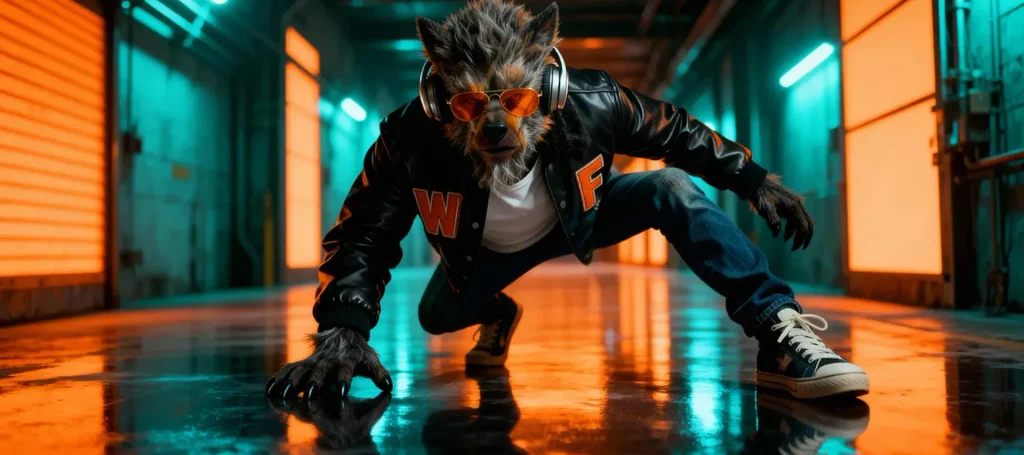
Fanta – Horrorverse
Fanta has taken a different approach to Halloween with their Horrorverse campaign, building a wider spooky world around the brand rather than relying on a single seasonal slogan.
The campaign features limited-edition collectible packaging starring Ghost Face alongside a cast of original Fanta horror characters.
The difference here is that Halloween isn’t simply a theme applied to an existing product. It’s the foundation for a broader creative concept, with characters, packaging and campaign activity working together to create a recognisable world around the brand.
That gives Fanta more opportunities to engage its audience than a one-off pun ever could. Collectible cans encourage people to look out for different designs, while the horror characters give the campaign a visual identity that can carry across multiple touchpoints.
Crucially, it still makes sense for Fanta. Halloween is an occasion built around sharing, parties and nights in, so creating limited-edition packaging that feels fun to collect gives people another reason to engage with the product during the season.
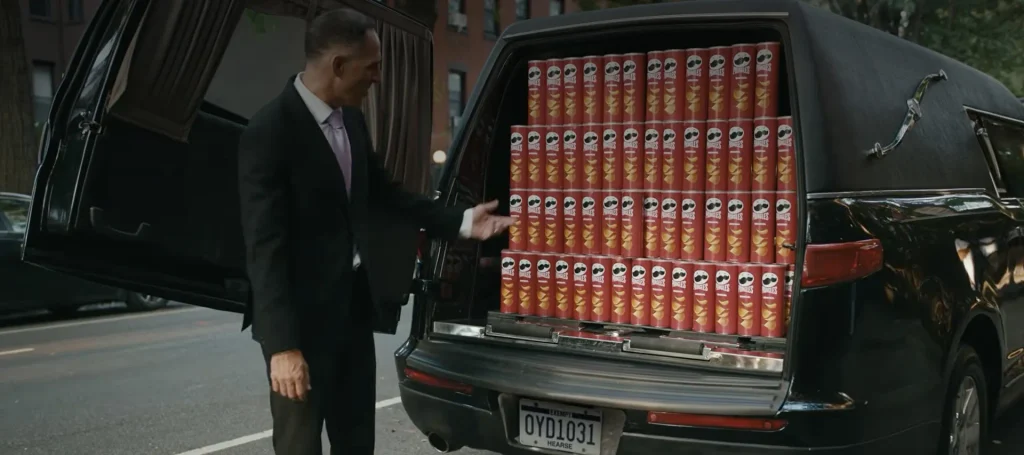
Pringles – Once You Drop
Somewhere along the line, Pringles decided that a Halloween campaign about a crisp-shaped urn was a perfectly reasonable idea. And honestly? We’re sat.
Once You Drop takes Pringles’ iconic cylindrical packaging to its logical, if slightly unhinged, conclusion. The brand is offering one lucky fan a custom urn which has been designed to look like a Pringles tube, alongside an ‘afterlifetime’ supply of crisps. To enter, fans in the US are invited to sign a ‘will and taste-ament’, pledging their eternal loyalty to the snack.
It’s an absurd concept, but that’s precisely why it works. The campaign builds on Pringles’ long-running Once You Pop, the Pop Don’t Stop brand saying, taking the familiar shape of its packaging and pushing the idea of undying snack loyalty to the wonderfully ridiculous extreme.
There’s even a real piece of brand history behind the joke. Fredric Baur, the designer of the original Pringles can, had some of his ashes buried in one after his death in 2008. The campaign takes that unusual bit of trivia and turns it into a headline-grabbing Halloween stunt.
What makes this particularly effective is how difficult the idea would be to lift and give to another brand. A generic Halloween pun can be borrowed by practically anyone, but a Pringles-shaped urn only really makes sense because of Pringles’ distinctive packaging and brand identity.
It’s also a reminder that memorable marketing doesn’t always need to take itself seriously. The campaign is bizarre, a little morbid, and undeniably tongue-in-cheek, which is a whole lot more interesting than another brand promising treats without tricks.
Less Hocus Pocus, More Creative Focus
There’s nothing wrong with a classic Halloween pun, and not every business has the budget to turn its products into monsters or commission a full-blown horror film. But creativity doesn’t have to cost the earth. Sometimes, all it takes is a clever subject line, a product-specific joke or a seasonal offer that gives customers a genuine reason to engage.
You Don’t Need a Monster Budget
The campaigns we’ve looked at are great examples of creative thinking, but that doesn’t mean every business needs to commission a horror short or turn its products into collectible Halloween memorabilia. Sometimes, the smallest ideas can make the biggest difference.
A subject line that plays on a specific product, a genuinely useful seasonal offer or a visual that gives an everyday item a Halloween twist can all help a campaign feel more distinctive. Even a familiar pun can work if it’s relevant to what you’re selling and feels natural for your brand.
Put Your Own Spell On It
When planning your own seasonal content, look for unexpected connections between what you sell and the occasion you’re marketing around. Consider what your audience might find funny, useful or worth sharing, then build a concept around that. Whether it’s a playful product joke, an interactive social post or an offer that genuinely gives customers something extra, the creative idea should have a clear purpose.
The strongest campaigns feel like they could only come from that particular brand. Think about what connects your products, your audience and Halloween, then find an unexpected way to bring them together. Just make sure the creative idea still gets your commercial message across.
Don’t Be a Copy-Cat
Here’s a simple question to ask before signing off your next seasonal campaign: could five of your competitors use exactly the same headline without changing a single word?
If the answer is yes, it might be worth getting the cauldron bubbling again. It doesn’t automatically mean that the idea is bad, but it could be a sign that your messaging is a little too generic to make a lasting impression.
Ultimately, you don’t need to reinvent Halloween to make your marketing stand out. You just need to give people a reason to remember your campaign instead of the fifty others they’ve seen that week.
If your headline could belong to any brand, there’s a good chance your audience won’t remember which one it belonged to.
Give them Pumpkin to Talk About
So, is “No Tricks, Just Treats” the worst thing to happen to Halloween since candy corn? Probably not. But when every brand is jumping on the same broomstick, it’s enough to make you scream. We’ve got templatised campaigns crawling out of the crypt, recycled taglines rising from the dead and enough spooktacular savings to haunt our inboxes until Christmas. Frankly, we’re coffin up clichés all over.
Sometimes, all you need is a little hocus focus. It’s time to brew up something original, and no matter if that’s a product twist or a headline with a bit of bite. Give your audience a fang-tastic reason to engage and make sure your brand has a memorable bit of personality. Whether you’re conjuring up a spellbinding social campaign or cooking up an offer that’s frighteningly good, give people something to sink their teeth into.
Don’t let your campaign become another ghost in the inbox. It’s time to get creative or get out of the crypt. Because when it comes to seasonal marketing, you can trick your audience into opening an email, but only a memorable idea will have them dying to come back.